
Exploring Biblical Reliability with Real-Life Evidence
Can we trust the Bible? For many people, that question lingers just beneath the surface of faith—especially in a world where ancient texts are often viewed with a healthy dose of skepticism.
In some ways, it reminds me of assembling something important at home. Every parent knows the challenge of putting together a complicated toy or a piece of baby furniture. You open the box and suddenly there are tiny screws, oddly shaped pieces, and an instruction booklet that quickly becomes your best friend. So you follow the steps carefully, tightening every bolt and studying every diagram.
Why? Because those instructions came from the people who designed the product in the first place. They know how every piece fits together and how it’s supposed to function. The manual exists to guide you safely through the process.
In a similar way, the Bible presents itself as God’s guide for life—a message given by the Creator who understands how life is meant to work.
Let’s unpack the question of biblical reliability together in everyday language, through both theology and real-world discoveries.
What Does “Biblical Reliability” Mean?
When we ask, “Can we trust the Bible,” we’re asking…
- Was the Bible accurately recorded and preserved over time?
- Can we trust what it says about God, humanity, and the world?
- Does it have authority to guide our beliefs and actions?
It’s like any important document or instruction manual: is it dependable? Can we base our lives on it?
The Bible’s Unique Claim: Inspired by God
The Bible itself claims to be inspired by God. 2 Timothy 3:16 tells us, “All Scripture is God-breathed and is useful for teaching, rebuking, correcting and training in righteousness.”
That means the Bible is not just a human book full of ideas or stories. I’s God’s message given through human authors, guided by His Spirit. It’s like God’s direct communication to us, written in words we can understand.
This divine inspiration is the foundation of biblical reliability. If God inspired the Bible, then its teachings carry God’s authority and truth.
Archaeology and History: Concrete Proofs of Biblical Reliability
One of the most exciting ways we can trust the Bible is through archaeology and historical research that have confirmed many biblical accounts… long after skeptics first doubted them. Let’s take a look at a few examples that really stand out.
1. The City of David
For a long time, skeptics claimed Jerusalem in biblical times was just a small, insignificant village with no real importance. But in the 1960s, archaeologists uncovered the ancient City of David—the core of Jerusalem during King David’s reign. They found massive walls, fortifications, and evidence of a thriving city dating back to around 1000 BC, exactly as the Bible describes (2 Samuel 5:6-10). This discovery helped prove biblical reliability on its historical accuracy about the kingdom of David.
2. The Dead Sea Scrolls
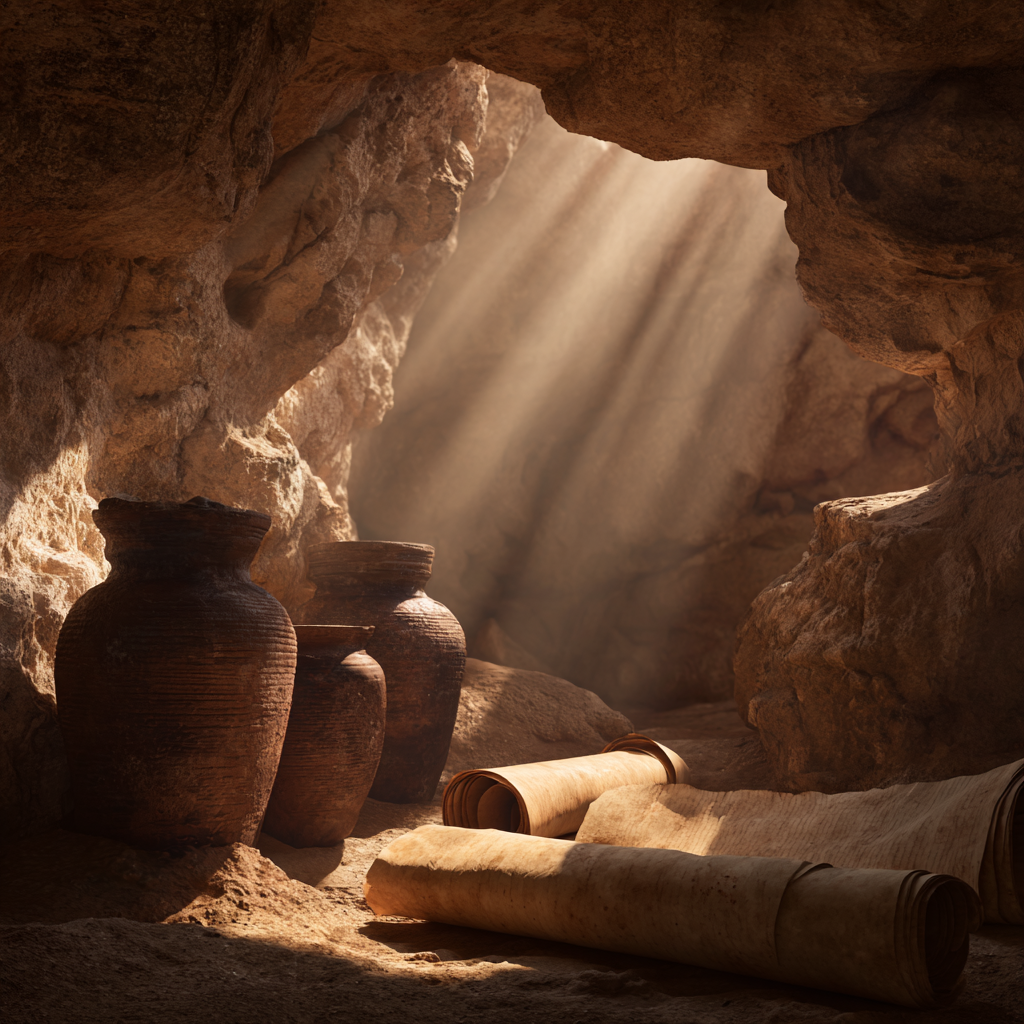
Before their discovery in the 1940s and 50s near Qumran, the oldest known manuscripts of the Old Testament were from around 1000 years after Christ. Many wondered if the Bible we have today was reliable or if it had changed over time. But the Dead Sea Scrolls contained copies of Old Testament books dating back over 2,000 years—virtually identical to the versions we read now. This confirmed the Bible’s faithful preservation and inspired confidence in its biblical reliability.
3. The Hittites Rediscovered
For years, the Bible mentioned a powerful people called the Hittites (Genesis 15:20, 2 Kings 7:6), but historians thought they were fictional because they could not find evidence of the long-lost people group. Then, early 20th-century excavations in modern-day Turkey uncovered the ruins of the Hittite Empire—one of the great ancient civilizations. Suddenly, a once-dismissed biblical people became a very real part of history, proving yet again biblical accuracy.
4. Pontius Pilate’s Inscription
Skeptics sometimes questioned if Pontius Pilate, the Roman governor who sentenced Jesus, was real since the Bible is the main source mentioning him. But in 1961, archaeologists found a stone inscription in Caesarea reading “Pontius Pilate, Prefect of Judea.” This confirmed the Bible’s accuracy on this historical figure.
These are just a few examples of how archaeology has proven the Bible to be incredibly historically reliable…showing that what was once doubted is actually true.
The Bible’s Consistency: One Story, Many Voices
The Bible was written over approximately 1,500 years by around 40 different authors – from kings and prophets to fishermen and scholars. Yet, it tells one unified story… God’s plan to rescue and redeem humanity through Jesus Christ.
That consistency is amazing when you think about it. Different writers, different times and places, but a coherent message that points to God’s love and salvation.
It’s like a symphony composed by many musicians who never met but played in perfect harmony. This unity adds to the Bible’s reliability as a trustworthy guide.
The Bible’s Power to Change Lives: A Living Word
The Bible is not just old words on a page. It has a unique power to speak into our hearts and change lives.
Countless people have testified that reading Scripture brought them hope, healing, wisdom, and courage when nothing else could.
Hebrews 4:12 says…
“For the word of God is alive and active. Sharper than any double-edged sword, it penetrates even to dividing soul and spirit, joints and marrow; it judges the thoughts and attitudes of the heart.”
This living quality of the Bible’s reliability is part of what makes so personal, not just a historical or doctrinal document. It meets us where we are, offering guidance and peace.
Addressing Doubts: Isn’t the Bible Full of Contradictions?
It’s honest and healthy to ask about difficulties in the Bible. Some worry about contradictions or confusing passages.
But many apparent contradictions come from misunderstandings, translation issues, or cultural differences. When studied carefully and contextually, these “contradictions” are resolved.
The Bible itself encourages us to seek wisdom and understanding (Proverbs 2:2-5). Approaching Scripture with humility and prayer invites the Holy Spirit to illuminate difficult passages.
The Bible’s Moral Authority: Can We Trust the Bible’s Guidance?
Beyond history and facts, the Bible claims to be our moral guide. Can we trust it to tell us right from wrong?
The answer is yes, because the Bible’s moral teachings align with human conscience and promote love, justice, mercy, and humility.
Jesus summarized the Bible’s moral law in two commands: love God and love others (Matthew 22:37-40). These timeless principles have shaped societies and transformed hearts for millennia.
A Story of Trust: Learning to Rely on the Bible
Years ago, a person I knew struggled with anxiety and uncertainty about life’s purpose. They’d read self-help books and tried many philosophies but felt empty. Then, a friend invited them to read the Bible together.
At first, they were skeptical. But as they explored the Scriptures, they found wisdom and comfort that no other book offered. Over time, the Bible became their anchor, a reliable guide through life’s storms.
This personal transformation is a testament to the Bible’s enduring reliability…not just as a book, but as God’s living word.
Practical Ways to Build Trust in the Bible’s Reliability
If you’re wondering how to deepen your trust in the Bible, here are some simple steps:
- Read regularly: Start small and be consistent. Let the Bible speak to you daily.
- Pray for understanding: Ask God to open your heart and mind to His word (Psalm 119:18).
- Join a community: Study the Bible with others to gain insight and encouragement.
- Apply it: Put its teachings into practice and watch how your life changes.
- Ask questions: Don’t be afraid to seek answers; faith grows through honest exploration.
Final Thoughts: Yes, We Can Trust the Bible!
So, can we trust the Bible? The answer is a resounding yes. The Bible’s divine inspiration, historical reliability confirmed by archaeology, consistent message, moral authority, and life-changing power all point to a trustworthy book.
Just like that instruction manual for a baby stroller, the Bible is God’s guidebook for life—designed to keep us safe, help us grow, and lead us into the joy of knowing Him.
Keep Learning
Want to learn more about why we can trust the Bible? You can read the first chapter of any book in our bookstore—for free! Take a few quiet moments and discover how our books meet you right where you are.


